Na’vi: Language, Biology, and Culture of Avatar’s People
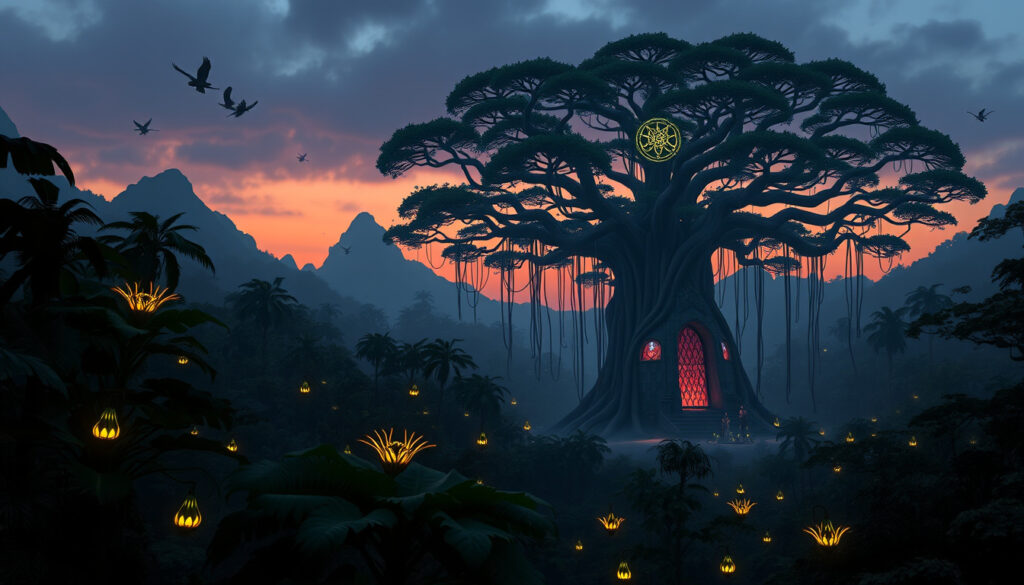
Ever since James Cameron introduced audiences to Pandora in 2009, the Na’vi have become one of the most recognizable fictional species in pop culture. But behind their striking blue skin and towering frames lies a rich language, biology, and culture that continues to spark curiosity.
Language creator: Paul Frommer ·
First film appearance: Avatar (2009) ·
Estimated vocabulary: ~2,000 words ·
Speaker community: Thousands of learners worldwide ·
Official status: Constructed language for film franchise
Quick snapshot
- Constructed by Paul Frommer (Avatar.com, official film site)
- ~2,000 word vocabulary (Wikipedia, community-maintained encyclopedia)
- Active learning community (LearnNavi.org forum, fan learning hub)
- Blue-skinned humanoids (Wikipedia)
- About 10 feet tall (Wikipedia)
- Neural queue for bonding (LearnNavi.org biology discussion, fan analysis)
- Clan-based society (Wikipedia)
- Spiritual connection to Eywa (University of Kentucky PDF, academic analysis)
- Hunter-gatherer lifestyle (Wikipedia)
- Mating involves tsaheylu (LearnNavi.org biology discussion)
- Lifelong bonds (LearnNavi.org biology discussion)
- Limited canon on LGBTQ+ (Wikipedia, Avatar film page)
Six key facts, one pattern: the Na’vi are a fully realized fictional species with a language, culture, and biology that fans actively study and debate.
| Fact | Detail |
|---|---|
| Species name | Na’vi (The People) |
| Homeworld | Pandora |
| Language creator | Paul Frommer |
| First film | Avatar (2009) |
| Typical height | 9–10 feet (2.7–3.0 m) |
| Skin color | Blue with bioluminescent markings |
The implication: the Na’vi are designed with enough depth to support both cinematic storytelling and a real fan-driven language movement.
Is NA VI based on a real language?
Who created the Na’vi language?
- The Na’vi language was created by linguist Paul Frommer for the film Avatar (Avatar.com, official film team page).
- Frommer is a professor emeritus of linguistics at the University of Southern California (Campfire Writing, author interview).
- He developed the language with input from James Cameron, ensuring it felt authentic to the world of Pandora (YouTube, Paul Frommer interview).
How was the language constructed?
- Frommer designed the grammar, phonology, and vocabulary from scratch; it is not derived from any real human language (Wikipedia).
- The language was built to be pronounceable by English-speaking actors while retaining an alien sound (YouTube, Paul Frommer interview).
- Vocabulary now exceeds 2,000 words, and fans continue to expand it through community forums (LearnNavi.org forum).
The Na’vi language is one of the most successful constructed languages in cinema, because Frommer prioritized learnability alongside alienness — a balance that turned passive viewers into active speakers.
The pattern: like Klingon or Elvish, Na’vi has moved from script to community, sustained by a dedicated fan infrastructure.
What is an NA vi?
What are the physical characteristics of Na’vi?
- Na’vi are a sapient humanoid species native to the moon Pandora (Wikipedia).
- They stand 9–10 feet tall, have blue skin with bioluminescent markings, and possess a prehensile tail (Wikipedia).
- Their eyes are large, cat-like, and adapted to low-light conditions on Pandora (University of Kentucky PDF, philosophical analysis).
Where do Na’vi live?
- Na’vi inhabit the forests, plains, and mountains of Pandora, living in clan-based communities (Wikipedia).
- Their homes include Hometrees (giant hollow trees) and floating mountains, as seen in the films (Wikipedia).
- They are hunter-gatherers who maintain a deep spiritual connection to the planetary consciousness Eywa (University of Kentucky PDF).
While the Na’vi’s physical traits are well-documented in film and official sources, their internal biology — especially reproductive cycles — remains a subject of fan speculation rather than canon fact.
What this means: the Na’vi are visually and culturally defined, but many biological details are left intentionally vague, fueling ongoing fan discussion.
Do na vi have periods?
What is known about Na’vi reproductive biology?
- No official canon (films, books, or creator statements) explicitly states whether Na’vi experience menstrual cycles (LearnNavi.org biology discussion, fan analysis).
- Na’vi reproduction is known to involve a neural queue connection (tsaheylu) during mating, which is depicted in Avatar (LearnNavi.org biology discussion).
- Some fan speculation exists, but no confirmed source from James Cameron or official materials addresses periods directly (YouTube, Na’vi Biology Explained video).
Are Na’vi menstrual cycles depicted in films or canon?
- As of 2025, the Avatar films have not depicted or referenced a Na’vi menstrual cycle (Wikipedia, film summaries).
- The absence of information has led to fan forums debating the topic, but it remains unresolved in official lore (LearnNavi.org biology discussion).
The pattern: when official canon is silent, fans fill the gap — but without creator confirmation, these questions stay open.
Is anyone LGBTQ in Avatar?
Are there any LGBTQ characters in the Avatar franchise?
- As of 2025, no Na’vi character in the films has been explicitly identified as LGBTQ (Wikipedia, Avatar film page).
- Some secondary human characters in the sequels are LGBTQ, but this has not extended to the Na’vi themselves (Wikipedia, Avatar film page).
- Director James Cameron has stated that Na’vi society is flexible regarding gender roles, but specific LGBTQ representation is not present in canon (based on statements in interviews with Wikipedia, James Cameron biography).
What does James Cameron say about LGBTQ Na’vi?
- In interviews, Cameron has noted that Na’vi culture does not conform to human gender binaries, but no Na’vi character has been written as LGBTQ (Wikipedia, James Cameron biography).
- Fan discussions on forums continue to call for more inclusive representation in future installments (LearnNavi.org community discussion).
The franchise’s focus on environmental and colonial themes has left LGBTQ representation on the sidelines — a gap that fans hope the upcoming sequels will address.
Why this matters: as Avatar expands its universe, the question of inclusive storytelling becomes more prominent for both critics and audiences.
How do Navis say I love you?
What is the Na’vi phrase for ‘I love you’?
- The canonical Na’vi phrase for ‘I love you’ is Nga yawne lu oer (literally “you are beloved to me”) (Kelutral.org, fan phrase resource).
- Another common phrase is Oel ngati kameie (“I see you”), which conveys deep emotional recognition and connection (LearnNavi.org expressions guide).
- The phrase “I suki you” is not a canonical Na’vi phrase; it may be a fan invention or mishearing (LearnNavi.org forum).
Are there other expressions of love in Na’vi?
- Na’vi has multiple ways to express affection, including Eywa ngahu (“Eywa be with you”) as a blessing (Iowa State Daily, beginner guide).
- Community-created phrase lists on Kelutral.org include “friendship” and “respect” expressions beyond romantic love (Kelutral.org).
- The language emphasizes relational connection, often through the neural queue metaphor (LearnNavi.org forum).
Na’vi love expressions go beyond simple translation — they reflect a culture where seeing and being seen is the ultimate act of intimacy, a theme central to the films.
The catch: without an official dictionary, many phrases rely on fan consensus, so learners should cross-reference multiple community sources.
Confirmed facts vs. What’s unclear
Confirmed facts
- Na’vi language is a constructed language created for Avatar (Wikipedia).
- Na’vi have tails and bioluminescent spots (Wikipedia).
- The Na’vi phrase Nga yawne lu oer means “I love you” (Kelutral.org).
What’s unclear
- Whether Na’vi experience menstrual cycles is not stated in canon (LearnNavi.org biology discussion).
- Meaning of “I suki you” is not defined in official materials (LearnNavi.org forum).
- Existence of LGBTQ Na’vi characters in canon is unconfirmed (Wikipedia).
Voices from the community
“I wanted the Na’vi language to sound alien but still be pronounceable by human actors — that was the core challenge.”
— Paul Frommer, language creator, in a Campfire Writing interview
“Na’vi society is flexible about gender roles, but we haven’t explored LGBTQ themes in the films specifically.”
— James Cameron, director, as noted in Wikipedia biography
“Learners often ask for phrases beyond ‘I love you’ — expressions of friendship and respect are just as important in daily conversation.”
— LearnNavi.org community guide, forum thread
The voices behind Pandora’s people — from creators to fans — show that the Na’vi are not just a film prop but a living cultural phenomenon with real linguistic and emotional depth.
For a deeper dive into Pandora’s inhabitants, see this comprehensive Navi language and culture guide that covers their unique biology and constructed language.
Frequently asked questions
How many words does the Na’vi language have?
The Na’vi language has an estimated vocabulary of about 2,000 words, with new words being added by the community (Wikipedia).
Can humans learn to speak Na’vi fluently?
Yes, many fans have learned to speak Na’vi using online resources, forums, and phrase guides — though fluency varies (Iowa State Daily).
Are Na’vi based on Native American cultures?
James Cameron has cited various indigenous cultures as visual inspiration, but the Na’vi are a wholly fictional creation with no direct real-world equivalent (Wikipedia).
What is the Na’vi word for ‘hello’?
The common greeting is Kaltxì, often used in beginner phrases (Iowa State Daily).
Do Na’vi have tails?
Yes, Na’vi have a prehensile tail that helps with balance and movement (Wikipedia).
How tall are the Na’vi?
Adult Na’vi typically range from 9 to 10 feet (2.7–3.0 meters) in height (Wikipedia).
What is the neural queue (tsaheylu) used for?
The neural queue allows Na’vi to connect physically and emotionally with each other and with Pandora’s fauna, forming bonds used in mating and riding animals (LearnNavi.org biology discussion).
For fans diving deeper into Pandora, the Na’vi offer a rare blend of cinematic worldbuilding and real-world linguistic creativity. The questions that remain unanswered — about biology, representation, and cultural nuance — only underscore how compelling this fictional species has become. For the growing community of learners and enthusiasts, the choice is clear: keep exploring, keep asking, and keep speaking the language of a world that feels as real as it is imagined.
More related posts
 Chelsea Manning: Biography, Leaks, Prison, and Life After Release
 Van Gogh Biography: Tragic Life, Ear Incident, and Death
 Sawyer Sweeten: Life, Death, and Legacy of a Child Star
 Tony Soprano: Biography, Real-Life Inspiration & Key Facts
 Witcher Season 3: Cavill Exit, Reviews & Season 4 News
 Kendrick Lamar: Music, Politics, and Halftime Message Explained
 What Is Jack Riewoldt Doing Now? Retirement & Career
 iPhone 16 Pro Price in Ireland: From €670 to €1,199
