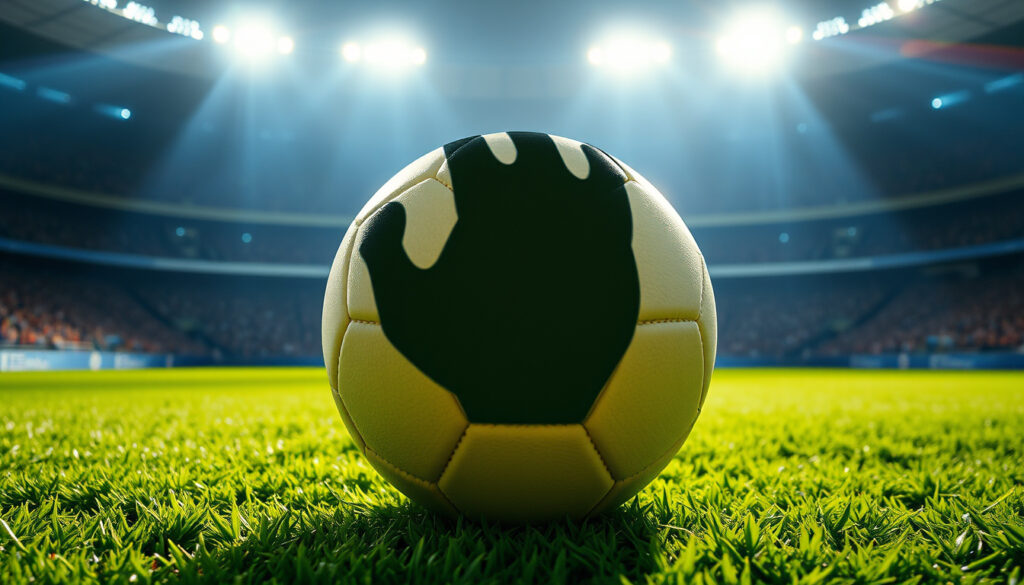
Diego Maradona: Biography, Death, Net Worth, Hand of God
Diego Maradona was the kind of player who made you believe football had a touch of magic, and his 1986 World Cup performance—including the infamous Hand of God goal and the sublime Goal of the Century—cemented his place in sporting legend. But his life off the pitch was a story of brilliance and chaos, leaving a legacy that still divides opinion today.
Full name: Diego Armando Maradona ·
Born: 30 October 1960, Lanús, Argentina ·
Died: 25 November 2020, Tigre, Argentina ·
Nationality: Argentine ·
Position: Attacking midfielder / Forward ·
Famous for: 1986 World Cup win, Hand of God goal
Quick snapshot
- Full name: Diego Armando Maradona (Britannica)
- Born 30 October 1960 in Lanús, Argentina (Britannica)
- Died 25 November 2020 from acute pulmonary edema (NPR)
- 1986 World Cup winner (Britannica)
- Exact net worth at death (disputed $50M–$100M)
- Total number of unreported drug episodes
- Final settlement details with Italian tax authorities
- 1976: Professional debut at age 15 (FIFA Museum)
- 1986: Hand of God goal + Goal of the Century (Mexico News Daily)
- 1991: 15-month cocaine suspension (Biography.com)
- 2020: Death at 60 (Britannica)
- Ongoing legal case regarding his medical care (NPR)
Eight key facts about Maradona, drawn from verified sources, show the arc of his life and career.
| Attribute | Value |
|---|---|
| Full Name | Diego Armando Maradona |
| Born | 30 October 1960, Lanús, Argentina |
| Died | 25 November 2020, Tigre, Argentina |
| Height | 1.65 m (5 ft 5 in) |
| Position | Attacking midfielder / Forward |
| Senior career years | 1976–1997 |
| International caps (goals) | 91 (34) |
| World Cup winner | 1986 |
What was Diego Maradona’s full name and when was he born?
Diego Armando Maradona: full name significance
His full name, Diego Armando Maradona, is a marker of his Argentine roots — “Diego” after his father, “Armando” a name his mother chose. He was born on 30 October 1960 in Lanús, Buenos Aires, according to Britannica (encyclopedic biography). Some sources list Villa Fiorito as his birthplace — the impoverished neighborhood where he actually grew up — but official records point to Lanús (Biography.com reports Villa Fiorito as his hometown).
The discrepancy between his official birthplace and his actual childhood home highlights how deeply poverty shaped his identity. Argentine fans still associate him with Villa Fiorito’s grit, not the hospital in Lanús.
Birthplace and early family background
Maradona grew up in Villa Fiorito, a poor shantytown on the outskirts of Buenos Aires. His father worked in a chemical factory; his mother raised five children. At age 10 he joined Argentinos Juniors’ youth team, Los Cebollitas, which reportedly went on a 136-game unbeaten streak with Maradona in the side (Biography.com). He made his professional debut shortly before his 16th birthday, in October 1976 (FIFA Museum (official football body)).
What was Diego Maradona’s cause of death and when did he die?
Official cause: acute pulmonary edema secondary to chronic heart failure
Maradona died on 25 November 2020 at his home in Tigre, Argentina. The official cause was acute pulmonary edema, a buildup of fluid in the lungs, secondary to chronic heart failure (NPR (U.S. public radio)). An autopsy also reportedly found traces of alcohol and cocaine in his system, though the immediate cause was cardiac.
Circumstances leading to his death on 25 November 2020
Maradona had been recovering from brain surgery to remove a subdural hematoma earlier in November 2020. He was under 24-hour medical supervision at home. On the morning of 25 November, he suffered a heart attack and died. His age was 60. The case sparked a homicide investigation into his medical team’s care (NPR).
His death wasn’t just a medical event — it became a legal reckoning. Argentine prosecutors charged seven medical professionals with homicide, arguing negligence. The case shows how a nation’s idol can become a test of accountability for the health system.
What was Diego Maradona’s net worth?
Estimated net worth at death: $50–100 million (disputed)
Estimates of Maradona’s net worth at the time of his death vary widely. EBSCO Research Starters (academic reference) cites figures between $50 million and $100 million, but the truth is murky. He earned enormous sums from playing contracts — especially at Napoli — and endorsements with Puma and other brands. But he also faced debts to Italian tax authorities, legal settlements from paternity cases, and the cost of supporting a large entourage.
Sources of wealth: playing contracts, endorsements, managerial roles
His peak earnings came during his Napoli years (1984–1991), where he reportedly earned $6–7 million per year from salary and bonuses. Endorsements added millions more. After retiring, he earned income as a coach (including the Argentine national team) and through personal appearances. Yet chronic spending left his estate in a legal tangle. The exact financial settlement with Italian tax authorities remains unclear.
Which clubs did Diego Maradona play for?
Argentinos Juniors (1976–1981)
Maradona debuted for Argentinos Juniors at age 15, scoring his first professional goal shortly after. He played 167 matches and scored 116 goals for the club before transferring to Boca Juniors.
Boca Juniors (1981–1982, 1995–1997)
A short first stint at Boca won him the Argentine Primera División in 1981. He returned to Boca at the end of his career, playing his final matches in 1997 before retiring.
Barcelona (1982–1984)
Barcelona paid a then-record transfer fee for Maradona, but his two-year spell was marred by injuries, a bout of hepatitis, and clashes with management. Still, he scored 38 goals in 58 appearances.
Napoli (1984–1991)
This was his golden period. Maradona led Napoli to their first-ever Serie A title in 1987 and a second in 1990, plus the UEFA Cup in 1989. He became a folk hero in Naples. Britannica calls it “the most successful period of his club career.”
Sevilla (1992–1993)
A brief, less successful stint in Spain’s La Liga, where he played 26 matches and scored 7 goals.
Newell’s Old Boys (1993–1994)
He played 7 matches for Newell’s, his final Argentine club before his permanent departure to Boca.
The pattern across his clubs: he was most effective when given absolute freedom and emotional connection — Napoli gave him that. Barcelona did not. For scouts, his career shows that talent alone isn’t enough; environment matters enormously.
What was the Hand of God incident and who is Diego Maradona Jr?
The 1986 World Cup quarter‑final goal against England
On 22 June 1986 at Estadio Azteca in Mexico City, Maradona scored two of the most famous goals in football history within four minutes. The first was the “Hand of God” — he punched the ball over England goalkeeper Peter Shilton, fooling the referee. The second, later voted “Goal of the Century,” saw him dribble past five English players from his own half. Mexico News Daily (regional media) describes the pair as “the two best‑known moments of the 1986 World Cup.”
Maradona later admitted the handball: “It was a little with the head of Maradona and a little with the hand of God,” he said. Argentina won 2–1 and went on to lift the trophy.
Diego Maradona Jr: biographical details and football career
Diego Maradona Jr (full name Diego Armando Maradona Sinagra) was born in 1986 to Maradona and Italian girlfriend Cristiana Sinagra. The player publicly acknowledged him after a paternity case. He played professional football in Italy and Argentina as a forward, representing clubs like Como and Brindisi, but never reached his father’s heights. He now works as a coach and football ambassador.
The Hand of God goal embodies Maradona’s duality — genius equal parts skill and cunning. For purists, it’s cheating; for romantics, it’s theater. That tension between means and ends defines his entire legacy.
The implication: this duality ensures Maradona’s legend will always be argued.
Timeline
- — Born in Lanús, Argentina
- — Professional debut for Argentinos Juniors (age 15) (FIFA Museum)
- — Transferred to Boca Juniors
- — Played for Barcelona
- — Starred at Napoli, winning two Serie A titles
- — Hand of God goal and Goal of the Century vs England
- — Won FIFA World Cup with Argentina
- — Led Argentina to World Cup final (lost to West Germany)
- — Expelled from World Cup after positive drug test
- — Died at age 60
The timeline shows a life of extreme highs and lows.
What was confirmed — and what remains unclear
Confirmed facts
- Full name: Diego Armando Maradona (Britannica)
- Date of birth: 30 October 1960 (Britannica)
- Date of death: 25 November 2020 (Britannica)
- Cause of death: acute pulmonary edema (NPR)
- 1986 World Cup winner (Britannica)
- 91 international caps, 34 goals (Biography.com)
What’s unclear
- Exact net worth at death (estimates range $50M–$100M)
- Number of unreported drug use episodes
- Final financial settlement with Italian authorities
- Whether the 53‑dribble record at the 1986 World Cup is definitively a single‑tournament record (MaradonaShop (fan site) claims it, but no independent verification)
- The reported 136‑game unbeaten streak of Maradona’s youth team is not independently confirmed
- The claim of 53 dribbles in the 1986 World Cup is not verified by official FIFA statistics
These lists capture the limits of public knowledge about Maradona.
Quotes that capture his dual legacy
“It was a little with the head of Maradona and a little with the hand of God.”
— Diego Maradona, after the Hand of God goal in 1986
“He was the greatest footballer of his generation.”
— Pelé, fellow Brazilian legend (Britannica)
“You took us to the top of the world and made us the happiest. You were the greatest.”
— Argentine president Alberto Fernández, after Maradona’s death
These quotes bracket his journey: the cheeky confession that sums up his on‑field audacity, the peer recognition from Pelé, and the national grief of its leader.
Summary
Diego Maradona remains football’s most complicated icon — a player whose genius on the pitch was as undeniable as his self-destruction off it. For Argentine fans, the memory of the 1986 World Cup will always outshine his later troubles. For football analysts, his career is a case study in how environment shapes talent. For the legal system, his death is still an open question. The man who once admitted he didn’t care about records because “I have millions of fans” now rests in a polarized legacy: either the best ever or the most tragically flawed. The choice, for every new generation, is personal.
abc7news.com, gettyimages.com, espn.com, en.wikipedia.org, lemonde.fr
Frequently asked questions
What position did Diego Maradona play?
He played as an attacking midfielder or second striker, often dropping deep to pick up the ball.
How many World Cups did Maradona win?
He won one World Cup, in 1986 with Argentina. He also reached the final in 1990.
Did Maradona win the Ballon d’Or?
Yes, he won the Ballon d’Or in 1986 (awarded by France Football).
What clubs did Maradona manage?
He managed the Argentine national team (2008–2010), Al Wasl (UAE), and Dorados de Sinaloa (Mexico), among others.
Was Maradona married?
He was married to Claudia Villafañe from 1989 to 2003. They had two daughters.
How many goals did Maradona score for Argentina?
He scored 34 goals in 91 international appearances (Biography.com).
What was Maradona’s height?
He was 1.65 meters (5 ft 5 in) tall.
Why is Maradona considered one of the greatest?
His dribbling, creativity, leadership in the 1986 World Cup, and success with Napoli earned him that reputation, even though his off-field life was troubled.
These answers address common curiosities.
Related reading
More related posts
 La Roche-Posay B5 – Complete Guide to Sensitive Skin Repair
 Big Little Lies Season 3: Status, Cast, Streaming, Worth Watching
 The Brutalist Movie – Plot, Cast, Reviews and Where to Watch
 Moon Knight Season 2: Confirmed, Cancelled, or Coming
 Cannabinoid Hyperemesis Syndrome: Symptoms & Recovery
 Everyone on This Train Is a Suspect – Plot, Review and Ending Guide
 Jon Stevens: Noiseworks, INXS, and Dismissed Assault Case
 Arsenal vs Chelsea Lineups 2026: Goals, TV Channel & Stream
