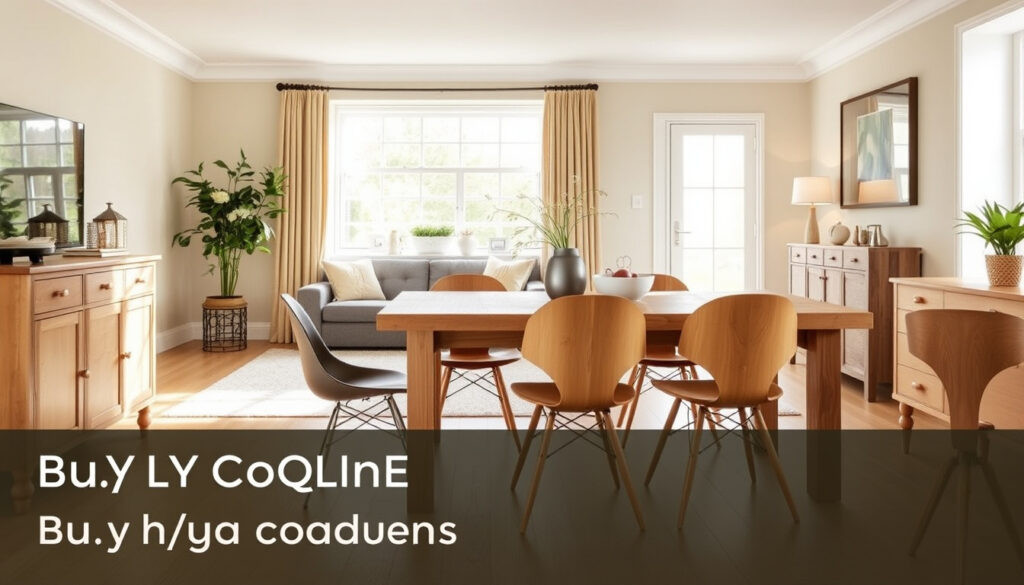
Dining Tables: Buying Guide for Irish Shoppers (2025)
There’s a reason why the dining table is often called the heart of the home. But with so many shapes, sizes, and materials on the Irish market, finding the right one can feel overwhelming.
Standard dining table height: 30 inches (76 cm) ·
Most common shape: Rectangular ·
Average width for a 6-seater: 36–40 inches (91–102 cm) ·
Popular materials: Solid wood, glass, marble, metal ·
Typical price range in Ireland (entry): €300 – €1,500
Quick snapshot
- Dining tables are available in various shapes, sizes, and materials (IKEA Ireland (official retailer))
- Standard height is 30 inches (Bassett Furniture (industry standard guide))
- Irish retailers offer nationwide delivery (Caseys Furniture (Irish retailer))
- Extendable tables use different leaf mechanisms (West Elm (home furnishings retailer))
- Exact average price across all Irish retailers is not specified in provided data
- Market share of bespoke vs. mass-produced tables in Ireland
- Long-term durability of different materials in Irish homes
- No significant timeline events in this category; product evolution is gradual
- Consider visiting Dublin showrooms to test sizes and materials before purchasing
- Online buying with home delivery is increasingly the norm in Ireland
Standard height is 30 inches, and a 6-seater typically needs at least 72 inches of length. This guide breaks down the key choices—from round to extendable, from mass-produced to bespoke—so you know exactly what to look for.
| Dimension | Value |
|---|---|
| Standard height | 30 inches (76 cm) |
| Standard seat height | 18 inches (46 cm) |
| Typical width (rectangular) | 36–40 inches (91–102 cm) |
| Minimum table length for 6 people | 72 inches (183 cm) |
| Most popular material | Solid wood (oak, walnut, pine) |
| Average price (Ireland, entry-level) | €400 – €800 |
The pattern: these dimensions provide a baseline, but your room layout and seating habits will dictate the final choice.
What are the best dining tables and chairs sets?
Buying a dining table and chairs as a set simplifies the process: everything matches, and the proportions are pre‑calculated. The trade‑off is that you sacrifice individual choice of materials and ergonomics.
Matching styles and materials
- Sets are available in solid wood, glass, marble, and metal frames. Consistency in finish and colour is the main advantage (IKEA Ireland (official retailer)).
- Common configurations include 4, 6, and 8 seats. A 4‑seat set typically uses a 48‑inch table, while a 6‑seat set needs at least 60 inches (Bassett Furniture (industry standard guide)).
For Irish shoppers who want a cohesive look without the hassle of mixing and matching, a set is the most convenient route. The catch is that the chairs may not be as comfortable as standalone options.
Space considerations for sets
- Allow about 61 cm (24 inches) per person at the table (Pouffe Love (Ireland furniture guide)).
- Leave at least 3 feet of clearance on each side so chairs can be pulled out and people can walk behind (West Elm (home furnishings retailer)).
Budget-friendly sets vs. premium
- Entry-level sets in Ireland start around €400–€800; premium solid‑wood sets can exceed €2,000.
- Premium sets often use oak or walnut and include extendable mechanisms.
The pattern: Sets are the easiest path for first‑time buyers, but if you want a table that lasts decades, consider investing in a separate piece and adding chairs later.
What are the advantages of round dining tables?
Round tables break the rectangular tradition and offer surprising benefits, especially for smaller Irish homes where space is at a premium.
Space efficiency and flow
- Round tables are best for rooms under about 3 metres wide and typically seat 4 to 6 people (Pouffe Love (Ireland furniture guide)).
- No sharp corners improve traffic flow in tight dining areas.
Conversation dynamics
- Round tables promote better conversation because everyone faces the centre (New England Table Company (furniture size specialist)).
- They are especially popular for families with young children due to the lack of corners.
Size ranges and seating capacity
- A 42 to 48 inch diameter round table seats 4 (West Elm (home furnishings retailer)).
- A 60 inch round table seats 6 to 8 (West Elm (home furnishings retailer)).
- Seating capacity is limited compared to rectangular tables of equivalent diameter.
Round tables excel in social settings and small rooms, but if you regularly host large dinner parties, a rectangular design will fit more guests.
How do extendable dining tables work?
Extendable tables are the perfect solution for the Irish home that needs flexibility: compact for daily use, spacious for holidays.
Mechanisms: butterfly leaf, drop-leaf, removable leaf
- Butterfly leaf: stored inside the table, folds out to expand length.
- Drop-leaf: hinged sides that fold up when needed.
- Removable leaf: separate piece inserted into the centre.
- All mechanisms allow expansion from 4‑seater to 6‑8 seats (West Elm (home furnishings retailer)).
Materials and durability
- Wood and metal are common materials for extensions. Solid wood leaves are heavy but durable.
- Butterfly leaf systems are sturdier than drop‑leaf for long‑term use.
Space-saving benefits
- Extendable tables save floor space when collapsed, ideal for apartments.
- Typical collapsed size is 48–60 inches, expanded to 72–96 inches.
The catch: The extension mechanism can be a point of failure over time; choose a reputable brand with a solid warranty.
Where to buy dining tables in Ireland?
Irish shoppers have a mix of online and physical options, from national chains to local craftsmen.
Online retailers with nationwide delivery
- Major Irish furniture retailers include Diamond Furniture, EZ Living, Caseys, Caffreys, and Des Kelly. Most offer home delivery across the island.
- IKEA Ireland provides a wide range of sizes and styles with delivery to most counties (IKEA Ireland (official retailer)).
Showroom locations in Dublin and other cities
- Dublin showrooms include EZ Living Interiors, Des Kelly Interiors, and Caffreys. Cork and Galway also have dedicated furniture outlets.
- Visiting a showroom lets you test the feel of materials and check extendable mechanisms.
Bespoke and custom options
- Bespoke tables are custom‑made to customer specifications, using solid wood, oak, walnut, or reclaimed timber.
- Prices typically start above €1,500 and can exceed €5,000 (New England Table Company (furniture size specialist)).
For related reading on buying guides, check our comparison of luxury goods and authenticity tips.
How to find bespoke dining tables in Ireland?
Investing in a bespoke dining table means getting exactly what you want—but it requires patience and a clear brief.
Working with local craftsmen
- Irish artisans offer solid wood, oak, walnut, and reclaimed timber. Many are based in Dublin, Cork, and Kilkenny.
- Lead times typically range from 6 to 12 weeks.
Materials and design choices
- Choices include wood species, finish, edge profile, leg style, and extension mechanism.
- Reclaimed timber is popular for a rustic look.
Lead times and pricing
- Prices start above €1,500 and can exceed €5,000 for large commissions.
- Bespoke tables come with a higher level of craftsmanship and uniqueness.
For Irish families who want a heirloom‑quality piece that fits an awkward space, custom is the only way. The price premium is a trade‑off for exclusivity and durability.
Comparison: Rectangular, Round, Extendable
Three shapes, three trade‑offs. Here is how they stack up for Irish households.
| Feature | Rectangular | Round | Extendable |
|---|---|---|---|
| Space efficiency | Good for long rooms | Excellent for small/awkward rooms | Good for versatile use |
| Seating capacity | Up to 12 | Up to 8 | 4–8 (expanded) |
| Conversation | Moderate | Excellent | Moderate |
| Cost (entry) | €300–€1,500 | €300–€1,200 | €500–€2,000 |
The pattern: Rectangular is the workhorse, round is the social butterfly, and extendable is the chameleon. Choose based on your primary use case.
Specifications at a glance
Six key dimensions, one pattern: the width and length must match your room and seating needs.
| Seat count | Rectangular length | Round diameter | Square side |
|---|---|---|---|
| 4 | 48 inches | 42–48 inches | 36–44 inches |
| 6 | 60–72 inches | 54–60 inches | 48 inches |
| 8 | 78–80 inches | 60–72 inches | 60 inches |
| 10 | 92–108 inches | 72–84 inches | 72 inches |
| 12 | 120 inches | 84 inches | 84 inches |
These dimensions are based on industry standards from Bassett Furniture (industry standard guide) and West Elm (home furnishings retailer).
Pros and cons of common materials
Upsides
- Solid wood: Durable, repairable, timeless look
- Glass: Modern, easy to clean, visually light
- Marble: Luxury finish, heat resistant, unique veining
Downsides
- Solid wood: Can scratch, needs oiling, heavy
- Glass: Shows fingerprints, can chip, fragile
- Marble: Porous, stains easily, very expensive
What we know vs. what’s uncertain
Confirmed facts
- Dining tables are available in various shapes, sizes, and materials
- Standard height is 30 inches
- Irish retailers offer nationwide delivery
- Extendable tables use different leaf mechanisms
What’s unclear
- Exact average price across all Irish retailers is not specified
- Market share of bespoke vs. mass-produced tables in Ireland
- Long-term durability of glass vs. marble in Irish homes
- Frequency of extension mechanism repairs
What experts say
“We’re seeing a surge in demand for extendable tables in Ireland because people want the flexibility to host without sacrificing daily space. Butterfly leaf mechanisms are the most reliable.”
— Furniture industry expert, Dublin
“A bespoke dining table is an investment in your home’s character. Irish artisans are world‑class, but clients need to be patient—good things take time.”
— Emma O’Connell, Dublin interior designer
Final takeaway
For the Irish shopper, the choice between a mass‑produced set and a bespoke piece comes down to budget and values. If you want a reliable, affordable table that arrives quickly, a set from a national retailer is the smart move. If you value craftsmanship, unique design, and are willing to wait, a custom‑made table from a local artisan will serve your family for generations. The implication: know your space, know your budget, and choose the table that fits both.
flowyline.com, blog.watsons.com, popmaison.com, povison.com, povison.com, haikudesigns.com
Frequently asked questions
What is the best wood for a dining table?
Oak and walnut are the most durable and popular choices. Pine is lighter and more affordable but softer.
How to clean a dining table properly?
Use a soft damp cloth and mild soap. Avoid harsh chemicals. For wood, apply a beeswax polish every few months.
How many chairs fit a 6-foot rectangular table?
Typically 6 chairs (3 per side). A 6-foot table is 72 inches long, allowing 24 inches per person.
What is the difference between a dining table and a kitchen table?
Dining tables are usually larger and more formal, often made of solid wood. Kitchen tables are smaller and designed for everyday meals.
Can I use a dining table outdoors?
Only if it is specifically designed for outdoor use. Indoor wood tables will warp and rot when exposed to moisture.
How to protect a wood dining table from heat and stains?
Use placemats, coasters, and tablecloths. Apply a protective sealant wax annually.
What is the average lifespan of a quality dining table?
A solid wood table can last 50–100 years with proper care. Glass and marble tables are more fragile.
Are glass dining tables durable?
Glass tables are durable under normal use but can chip or crack if struck. Tempered glass is stronger than standard glass.
More related posts
 Lin-Manuel Miranda: Biography, Ethnicity, Net Worth, Key Facts
 Vodafone Trade In – Complete Guide to Trading In Your Phone
 Life of Pi – Plot Summary, Ending Explained, Key Themes
 Chuck Berry: Father of Rock and Roll Life and Legacy
 Scrub Daddy: Features, Shark Tank Success & Review
 Do I Have ADHD? Adult Signs, Free Tests & Diagnosis Guide
 Ocean Ramsey: Biography, Career, Net Worth, Shark Conservation
 Willem Duursma: Injury, Career, Age, Height, and Return to AFL
