How to Stop Diarrhoea Fast: Evidence-Based Home Remedies
It hits without warning—the sudden, urgent need to get to a bathroom, and then the worry: how long will this last? This guide cuts through the noise with evidence-based steps to feel better fast, starting with the most critical step—keeping your body hydrated, whether the cause is a stomach bug, something you ate, or travel trouble.
- Start oral rehydration immediately – sip an oral rehydration solution (ORS) every 5–10 minutes.
- Consider loperamide (Imodium) if you have no fever and no blood in your stool.
- Avoid solid foods and sugary drinks for the first few hours, then introduce bland, low-fiber foods.
Average duration of acute diarrhea: 1 to 2 days ·
Annual episodes per adult: About 1-2 in the U.S. ·
Dehydration risk if untreated: Can occur within 24 hours in severe cases
Quick snapshot
- Oral rehydration is essential (NIDDK (NIH) – US digestive health authority)
- Loperamide is effective for non-infectious diarrhea (Vinmec – international health system)
- BRAT diet is safe but not proven superior (Medical News Today – health media)
- Probiotics may reduce duration, but evidence is mixed (Mayo Clinic – US academic medical center)
- Homeopathic remedies lack proven efficacy (EBSCO Research Starters – evidence-based review)
- Most acute episodes resolve in 1–2 days (NIDDK (NIH))
- Dehydration risk rises after 24 hours without adequate fluid intake (Healthline – health publisher)
- Gradually reintroduce low‑fiber foods after 24–48 hours (HealthPartners – US healthcare system)
- Consult a doctor if diarrhea persists beyond 2 days (Ubie Health – clinical decision support)
The following table summarizes essential facts about diarrhea.
| Fact | Value |
|---|---|
| Normal stool frequency | 3 times a day to 3 times a week |
| Acute diarrhea definition | 3+ loose stools in 24 hours (Ubie Health) |
| Most common cause | Viral infection (norovirus) |
| Dehydration signs | Thirst, reduced urination, dry mouth, weakness (Mayo Clinic) |
What stops diarrhea fast?
Over-the-counter medications
For quick relief without a fever or blood in stool, loperamide (Imodium) and bismuth subsalicylate (Pepto‑Bismol) slow intestinal fluid movement and reduce frequency. Vinmec (international health system) notes these work best for mild cases lasting less than 24 hours. Never use loperamide if you have a fever or notice blood in your stool — that signals a possible infection where stopping the diarrhea could trap harmful bacteria.
Home remedies
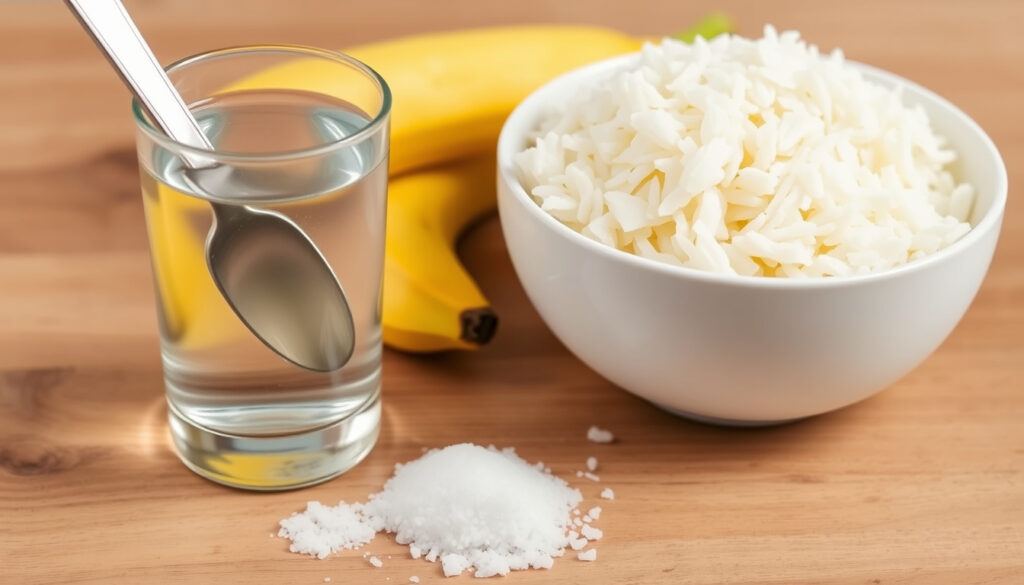
Hydration comes first. An oral rehydration solution (ORS) replaces lost water and electrolytes. The World Health Organization’s simple recipe: ½ teaspoon salt, 6 teaspoons sugar dissolved in 1 liter of clean water. Sip 1–2 tablespoons every 5–10 minutes if nauseated. Ubie Health (clinical decision tool) confirms this approach prevents dehydration effectively.
For mild, non‑febrile diarrhea, loperamide plus oral rehydration cuts symptom duration by up to 24 hours — but skip the drug if you have fever or bloody stool, as it may prolong infection.
The pattern: fast relief comes from a two‑pronged strategy — replace fluids and use an anti‑motility agent when safe. Skipping either half risks dehydration or ineffective treatment.
What drink stops diarrhea fast?
Oral rehydration solution recipes
- Water alone is better than nothing, but lacks electrolytes. Broths, diluted sports drinks, and commercial ORS (like Pedialyte) are more effective. NIDDK (U.S. National Institutes of Health) recommends electrolyte liquids.
- Homemade ORS (see recipe above) is cheap and proven. Healthline (evidence‑based health publisher) says sports drinks work for mild adult cases, but they’re high in sugar.
- Avoid sugary soft drinks, fruit juice, caffeine, and alcohol — they can worsen diarrhea by drawing water into the bowel.
The catch: sweet drinks may feel hydrating but the sugar load can actually increase stool output. Stick to low‑sugar, electrolyte‑balanced fluids.
What foods stop diarrhea?
BRAT diet and low‑fiber foods
The BRAT diet — Bananas, Rice, Applesauce, Toast — has been a go‑to for decades. These bland, low‑fiber foods help firm stools and provide potassium and pectin. Medical News Today (health media) reports that small, frequent meals with sodium‑ and potassium‑rich foods (broths, boiled potatoes) are better than large meals. Crackers, plain pasta, and oats also work.
Foods to avoid
- Dairy — lactose can be hard to digest during episodes.
- Spicy, greasy, or fried foods — irritate the gut lining.
- High‑fiber foods (whole grains, beans, raw vegetables) — increase stool bulk.
- Artificial sweeteners (sorbitol, xylitol) — can cause osmotic diarrhea.
Why this matters: the BRAT diet is safe, but it’s not nutritionally complete. HealthPartners (US healthcare system) advises slowly returning to a normal, low‑fiber diet after 24–48 hours to avoid malnutrition.
Don’t stay on the BRAT diet more than 48 hours — it’s too low in protein and calories for prolonged recovery.
What does diarrhea flush out?
Common causes of diarrhea
Diarrhea is the body’s way of rapidly expelling water, electrolytes, and unabsorbed nutrients. It is not a detox — it’s a symptom. Infectious agents (norovirus, bacteria, parasites) are the most common triggers. Mayo Clinic (top‑tier academic medical center) explains that the loss of electrolytes — sodium, potassium, chloride — can lead to dehydration and electrolyte imbalance within hours in severe cases.
A common myth is that diarrhea “cleans you out.” In reality, it removes essential nutrients and can weaken the immune system. NIDDK (NIH) emphasizes that rehydration, not food, is the priority.
While the body’s purging response helps eliminate pathogens, it also strips vital resources — making rapid fluid replacement the single most important intervention.
How many poops a day is considered diarrhea?
When to seek medical attention
Diarrhea is clinically defined as three or more loose or watery stools in a 24‑hour period. Ubie Health (clinical reference) adds that acute diarrhea lasts less than two weeks; persistent (2–4 weeks) or chronic (>4 weeks) diarrhea requires medical workup.
Red flags that mean see a doctor right away:
- Diarrhea lasting more than 2 days in adults
- Blood or pus in stool
- Fever above 101°F (38.3°C)
- Severe abdominal pain
- Signs of dehydration: dizziness, dry mouth, dark urine, little or no urination
For those with compromised immune systems or chronic conditions, the threshold is lower — call your doctor at the first sign.
The pattern: most cases are self‑limiting, but knowing the red‑flag criteria separates safe home management from dangerous delay.
Confirmed facts
- Oral rehydration is essential for all cases (NIDDK (NIH))
- BRAT diet is safe but not proven superior to normal low‑fiber foods (Medical News Today)
- Loperamide is effective for non‑infectious diarrhea (Vinmec)
These are well-established medical recommendations.
What’s unclear
- Probiotics may reduce duration, but evidence is mixed (Mayo Clinic)
- Effectiveness of homeopathic remedies is unproven (EBSCO Research Starters)
- Rice water may help bind stools, but evidence is limited (Vinmec – international health system)
More research is needed in these areas.
Expert perspectives
“The most important treatment for diarrhea is to replace lost fluids and electrolytes to prevent dehydration.”
– Centers for Disease Control and Prevention (US public health agency)
“Contact your doctor if diarrhea persists beyond two days or if you have severe abdominal pain, bloody stools, or fever.”
– Mayo Clinic (academic medical center)
Acute diarrhea is messy, uncomfortable, and usually not dangerous — but dehydration can turn it serious quickly. For anyone experiencing these symptoms, the choice is clear: match each loose stool with a glass of oral rehydration solution, avoid sugary drinks and heavy foods for the first 24 hours, and know the red flags. Do that, and most cases resolve in a day or two without further trouble. Ignore the myths about “cleansing” or “detoxing” — the real priority is keeping your body’s water and salt balance intact until the infection passes.
Related reading: Pantoprazole 20 mg – Uses, Dosage and Side Effects · What Is Influenza A – Symptoms, Risks, Treatment Guide
Frequently asked questions
Can diarrhea be prevented?
Good hand hygiene, safe food and water practices, and avoiding shared utensils reduce viral and bacterial causes. Travelers should follow food‑safety guidelines and consider probiotics for prevention. (CDC)
Is it safe to take anti‑diarrhea medication?
Yes for mild, non‑febrile cases without blood. Loperamide (Imodium) is safe for adults if used according to label. Never use it if you have fever or bloody stool — it can prolong bacterial infections. (Vinmec)
What should I eat after diarrhea stops?
Start with bland, low‑fiber foods like crackers, rice, toast, and bananas. Gradually reintroduce lean proteins, cooked vegetables, and dairy over 1–2 days. (HealthPartners)
Can diarrhea cause weight loss?
Acute diarrhea can cause temporary water weight loss due to fluid loss, but it’s not healthy weight loss. Chronic diarrhea may lead to malnutrition and should be evaluated. (NIDDK)
How does diarrhea spread?
Most infectious diarrhea spreads through the fecal‑oral route — contaminated food, water, or surfaces. Norovirus is highly contagious and can survive on surfaces for days. (CDC)
Are probiotics helpful for diarrhea?
Evidence suggests certain probiotics (Saccharomyces boulardii, Lactobacillus) may reduce the duration and severity of antibiotic‑associated and traveler’s diarrhea. However, results vary. (EBSCO Research Starters)
What is the difference between acute and chronic diarrhea?
Acute diarrhea lasts less than 2 weeks and is usually caused by infection. Chronic diarrhea persists for 4 weeks or longer and may be linked to underlying conditions like IBS, IBD, or malabsorption. (Mayo Clinic)
More related posts
 Yung Lean: Biography, Health Scare 2016, Sobriety, Net Worth
 Michael Dickson Salary: Is He the NFL’s Highest Paid Punter
 Breaking News Poll Results – 2026 Midterm Polling Guide
 Day Light Savings End 2025: When Ireland’s Clocks Go Back
 Kerry O’Keeffe: Age, Height, Stats, and Nickname Skull
 Pokemon Cards Kmart – Prices Stock and Availability Guide
 Jon Stevens: Noiseworks, INXS, and Dismissed Assault Case
 Han Solo: Smuggler, Hero, and Rebel General | Star Wars Character Guide
